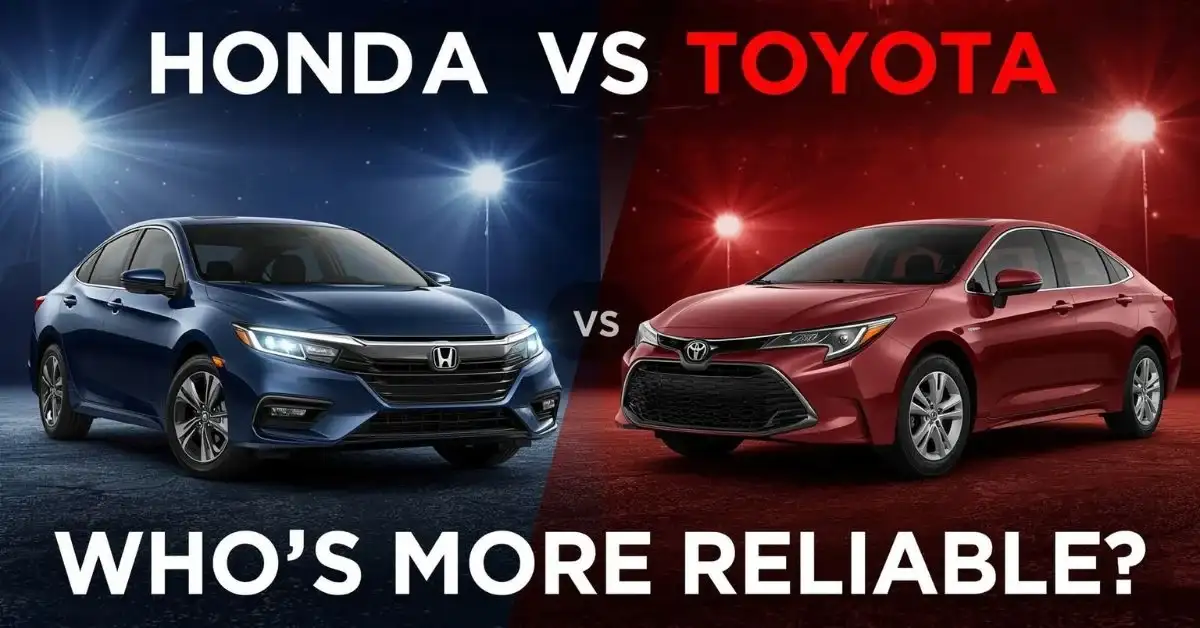
When it comes to buying a dependable car that won’t cause constant headaches, one comparison dominates search results year after year: Toyota vs Honda reliability. Both brands have built global trust by producing vehicles that last longer, cost less to maintain, and retain strong resale value.
However, reliability is not just about brand reputation. It’s about how engines perform over time, how transmissions handle daily stress, how much owners spend on maintenance, and how vehicles age after 8, 10, or even 15 years.
What Reliability Really Means for Car Owners
Reliability is often misunderstood. A car can feel great during the first three years but become expensive and frustrating later. True reliability focuses on:
- Engine durability at high mileage
- Transmission lifespan
- Frequency of unexpected repairs
- Long-term maintenance costs
- Performance after warranty expiration
- Resale value and depreciation
A reliable car should run smoothly for over a decade with predictable ownership costs.
Toyota vs Honda: Engineering Philosophy Explained
Toyota’s Reliability-First Approach
Toyota is known for its conservative and methodical engineering. Instead of introducing risky innovations quickly, Toyota focuses on refining proven systems.

Toyota’s reliability strategy includes:
- Extensive long-term testing
- Gradual upgrades instead of sudden redesigns
- Lower engine stress tuning
- Emphasis on durability over performance
This approach results in vehicles that may feel less sporty but tend to last longer with fewer mechanical problems.
Honda’s Performance-Oriented Engineering
Honda balances reliability with performance and efficiency. Its vehicles are known for smooth acceleration and engaging driving dynamics.
Honda engineering characteristics:

- High-efficiency engines
- Lightweight vehicle design
- Sportier handling
- Innovative powertrain technology
While Honda vehicles are reliable, they often require more consistent maintenance, especially as mileage increases.
Engine Reliability: Toyota vs Honda
Toyota Engine Reliability
Toyota engines are widely respected for their long lifespan. Many Toyota models easily exceed 250,000 miles with routine maintenance.
Reasons Toyota engines last longer:
- Conservative horsepower tuning
- Robust cooling systems
- Strong internal components
- Reliable timing chain setups
Engines used in the Corolla, Camry, RAV4, and 4Runner are especially known for durability.
Honda Engine Reliability
Honda engines are efficient and responsive, delivering strong performance for their size.
Strengths include:
- Excellent fuel economy
- Smooth engine operation
- Impressive power-to-weight ratio
However, turbocharged Honda engines require strict oil change intervals. Neglecting maintenance can shorten engine life.
Verdict: Toyota engines are generally more forgiving and longer-lasting under varied driving conditions.
Transmission Reliability Comparison
Toyota Transmissions
Toyota transmissions are built with longevity in mind.
Key points:
- Traditional automatics are extremely durable
- Toyota CVTs are among the most reliable available
- Lower failure rates compared to competitors
Toyota prioritizes smooth, stress-free operation over aggressive shifting.
Honda Transmissions
Honda transmissions offer a refined driving experience but can be more sensitive.
Notable aspects:
- Older automatic transmissions had issues
- Modern CVTs have improved significantly
- Regular fluid changes are critical
Verdict: Toyota transmissions tend to last longer with less maintenance risk.
Maintenance and Repair Costs Over Time
Toyota Maintenance Costs
Toyota vehicles are known for predictable and affordable ownership costs.
Advantages:
- Widely available parts
- Fewer major repairs
- Lower labor expenses
Many Toyota owners report stable maintenance costs even after 8–10 years.
Honda Maintenance Costs
Honda maintenance is still affordable but slightly higher long term.
Reasons include:
- Turbo engine servicing
- CVT maintenance requirements
- Higher sensitivity to skipped services
Honda remains budget-friendly, but Toyota usually costs less overall.
Real-World Longevity and High Mileage Performance
Toyota vehicles are frequently used in high-mileage and demanding environments such as taxi fleets and delivery services.
Common high-mileage Toyota models:
- Toyota Corolla
- Toyota Camry
- Toyota Prius
- Toyota Tacoma
Honda vehicles also achieve high mileage but are more commonly used for commuting rather than heavy-duty use.
Verdict: Toyota vehicles perform better under long-term stress.
Reliability by Vehicle Category
Sedan Reliability: Camry vs Accord
- Toyota Camry: Focused on long-term durability
- Honda Accord: Sportier but slightly higher upkeep
Winner: Toyota Camry
Compact Cars: Corolla vs Civic
- Toyota Corolla: Simple, reliable design
- Honda Civic: Fun to drive, turbo models need care
Winner: Toyota Corolla
SUV Reliability: RAV4 vs CR-V
- Toyota RAV4: Proven reliability and strong hybrid system
- Honda CR-V: Comfortable but CVT maintenance is essential
Winner: Toyota RAV4
Hybrid Reliability: Toyota’s Biggest Advantage
Toyota leads the industry in hybrid reliability, with over two decades of experience.
Why Toyota hybrids stand out:
- Long-lasting hybrid batteries
- Simple hybrid system design
- Very low failure rates
Honda hybrids are improving but lack Toyota’s long-term track record.
Comparison Table
| Factor | Toyota | Honda |
|---|---|---|
| Engine Longevity | Excellent | Very Good |
| Transmission Reliability | Excellent | Good |
| Maintenance Cost | Low | Moderate |
| Hybrid Technology | Industry Leader | Improving |
| Repair Frequency | Very Low | Low |
| Resale Value | High | High |
| Driving Experience | Comfortable | Sporty |
| Long-Term Ownership | Best Choice | Good Choice |
| Overall Reliability | ⭐⭐⭐⭐⭐ | ⭐⭐⭐⭐ |
Owner Satisfaction and Resale Value
Toyota owners often keep their vehicles longer, which reflects confidence in long-term reliability. Honda owners enjoy driving comfort and performance but may upgrade sooner.
Reliability directly impacts resale value, and Toyota vehicles consistently hold their value better due to long-term trust.
Expert Reliability Insights
This comparison is based on:
- Long-term ownership data
- Consumer reliability studies
- Maintenance cost analysis
- Real-world driving experience
The goal is to provide unbiased, experience-based guidance rather than brand promotion.
Toyota vs Honda Reliability: Final Verdict
Both brands are excellent, but when reliability is the primary concern, Toyota has a clear edge.
Choose Toyota if you want:
- Maximum long-term reliability
- Lower ownership costs
- Proven hybrid systems
- Stress-free ownership
Choose Honda if you want:
- Sportier driving experience
- Strong fuel efficiency
- Reliable performance with proper maintenance
Overall Winner: Toyota
Frequently Asked Questions (FAQ)
- Is Toyota more reliable than Honda?
Yes, Toyota is generally considered more reliable due to lower repair frequency and stronger long-term durability. - Which brand lasts longer, Toyota or Honda?
Toyota vehicles typically last longer, especially under heavy use or less-than-perfect maintenance. - Are Honda cars expensive to maintain?
Honda maintenance costs are moderate, but turbo engines and CVT transmissions require regular servicing. - Which brand is better for long-term ownership?
Toyota is better for long-term ownership because of lower maintenance costs and proven reliability. - Do Toyota cars hold value better than Honda?
Yes, Toyota vehicles usually have higher resale value due to long-term trust and durability.
Vehicle insurance costs vary depending on model, location, and driving history, which can significantly impact long-term affordability.